![Small red wooden Maritime Museum with a large anchor sculpture in front and a blue sky above.] , but I'll correct formatting. Wait. Need proper JSON array strings without extra punctuation. Let's rewrite.](https://norcaldirectory.com/wp-content/uploads/2026/11/humboldt-bay-maritime-museum-640x360.jpg)
Humboldt Bay Maritime Museum
- Cookhouse Rd, Samoa, CA 95564, USA
- (707) 444-9440
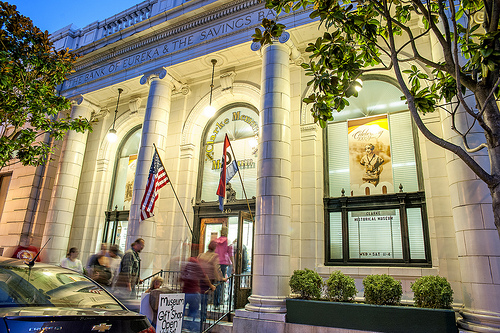
Housed in an elegant bank built in 1911, this museum offers exhibits on Humboldt County’s past.
Reclamar el listado es la mejor manera de gestionar y proteger tu negocio.
¡Reclama ahora!

Just Here
I enjoyed visiting the Clarke Historical Museum and appreciated the effort to preserve the history of Northwestern California. The exhibits on Native American cultures, pioneer life, logging, and local industries were thoughtfully presented, and it’s clear the museum values preserving the region’s heritage.
However, I left feeling disappointed by the very limited representation of African American history. Out of the entire museum, I found only two small references to Black people. One was a panel about Edward “Alice” Jones, whose story focused on arrest, incarceration, and institutionalization. The other consisted of posters of famous Black musicians such as Duke Ellington, Chick Webb, and Cab Calloway displayed above a case of firearms. Without interpretive context explaining why these items were placed together, the display felt disconnected and unintentionally, or intentionally, diminished the broader contributions of Black Americans to the region.
Given the museum’s mission to celebrate the “rich and varied history of Northwestern California,” I believe there is an opportunity to tell a more complete story.
For example, future exhibits could highlight:
Early African American settlers who came to Northern California during the Gold Rush and helped build communities throughout the region.
Black sailors, dockworkers, cooks, barbers, hotel owners, and laborers who lived and worked in Humboldt County during the nineteenth and early twentieth centuries.
The history of the Buffalo Soldiers, whose service throughout Northern California helped patrol wilderness areas, protect transportation routes, and support the development of what would become our national forests and parks.
African American veterans who settled on the North Coast after World War II.
The history of Black students, faculty, and civil rights activism at Cal Poly Humboldt.
Black-owned businesses, churches, artists, educators, musicians, and community leaders who have contributed to Humboldt County over the years.
There are also remarkable Californians whose stories could help connect Humboldt’s history to the broader story of Black life in the state, including:
Mary Ellen Pleasant (1814–1904), a pioneering entrepreneur, abolitionist, and civil rights activist often called the “Mother of Civil Rights in California.” She used her wealth to fight discrimination and supported John Brown’s abolitionist movement.
Allen Allensworth (1842–1914), a formerly enslaved man who became a U.S. Army chaplain and founded Allensworth, California—the only town in the state established, financed, and governed by African Americans.
William Alexander Leidesdorff Jr. (1810–1848), one of California’s earliest Black pioneers, a successful businessman, diplomat, and landowner whose influence helped shape early San Francisco before statehood.
Mifflin Wistar Gibbs (1823–1915), an entrepreneur, newspaper publisher, attorney, and judge whose career reflected the important role African Americans played in building the American West.
Biddy Mason (1818–1891), who gained her freedom in California and became one of Los Angeles’ most successful businesswomen and philanthropists, helping establish schools, charities, and the city’s first Black church.
These individuals may not have lived in Humboldt County, but they are central to California history and demonstrate that African Americans were not only entertainers or victims of discrimination—they were founders, entrepreneurs, military leaders, educators, civic leaders, and community builders.
Museums have an incredible opportunity to broaden our understanding of local history. I hope future exhibits will include more of these stories so visitors can better appreciate the full diversity of the people who helped shape Northwestern California. Including this history would complement the museum’s existing collections and help fulfill its mission of representing the region’s “rich and varied history.”
Rebecca Aires
Very cool! They don’t require that you pay to visit but they ask if you can give them a $5 donation if possible. Guy at the front desk desk was lovely and very helpful! Museum had a lot of interesting info about the city and surrounding area. Loved it!
Ed Lee
I wanted to visit the large
Native American collection of Northern California Tribes
and was not disappointed.
You will find a small museum
in an old bank building with
a number of exhibits and
collections including Native
American, guns, gems and minerals, local history, and
much more.
The Hallstone and Hover collections in the Native
American exhibit includes baskets from the local
Yurok and Karuk tribes.
The Becker collection
includes necklaces from
the local tribes made
from sea shells and pine
nuts.
The gun collection includes
historic firearms and weapons
including muskets, swords,
and small guns.
I also found a nice quilt
display, a mineral collection,
a Victorian Room display,
and a number of local history
exhibits including the
expulsion of the Chinese.
Located on E street in
downtown Eureka with
limited parking on the streets.
A nice place to stop and
learn about the local history
of Humboldt County and the local tribes with a Native
American plant collection in front of the museum.
c “cfl” lane
A very nice museum with interesting native collections as well as items from Eureka. A pleasant stop when in the area.
Lea Cartwright
Small but densely packed museum in Eureka. The first section is natural history and has a large collection of birds and rocks. There is a Vietnam war memorial that focuses on some of the locals. A Victorian section showcases the history of the area.
The middle section is reserved for rotating exhibits. On our visit they were showcasing quilts.
Lastly, they have the largest collection of Native American baskets in the country! Pretty neat for such a small museum. Definitely a great visit.
Suggested donation of $5 for kids and $10 for adults.